

🔍 Do You Know? 10 Things You Probably Didn’t Know About USB Type-C Connectors
When people see a USB Type-C port, they think:
“Fast charging. High speed. Modern.”
But behind that small reversible interface lies a surprisingly complex engineering design.
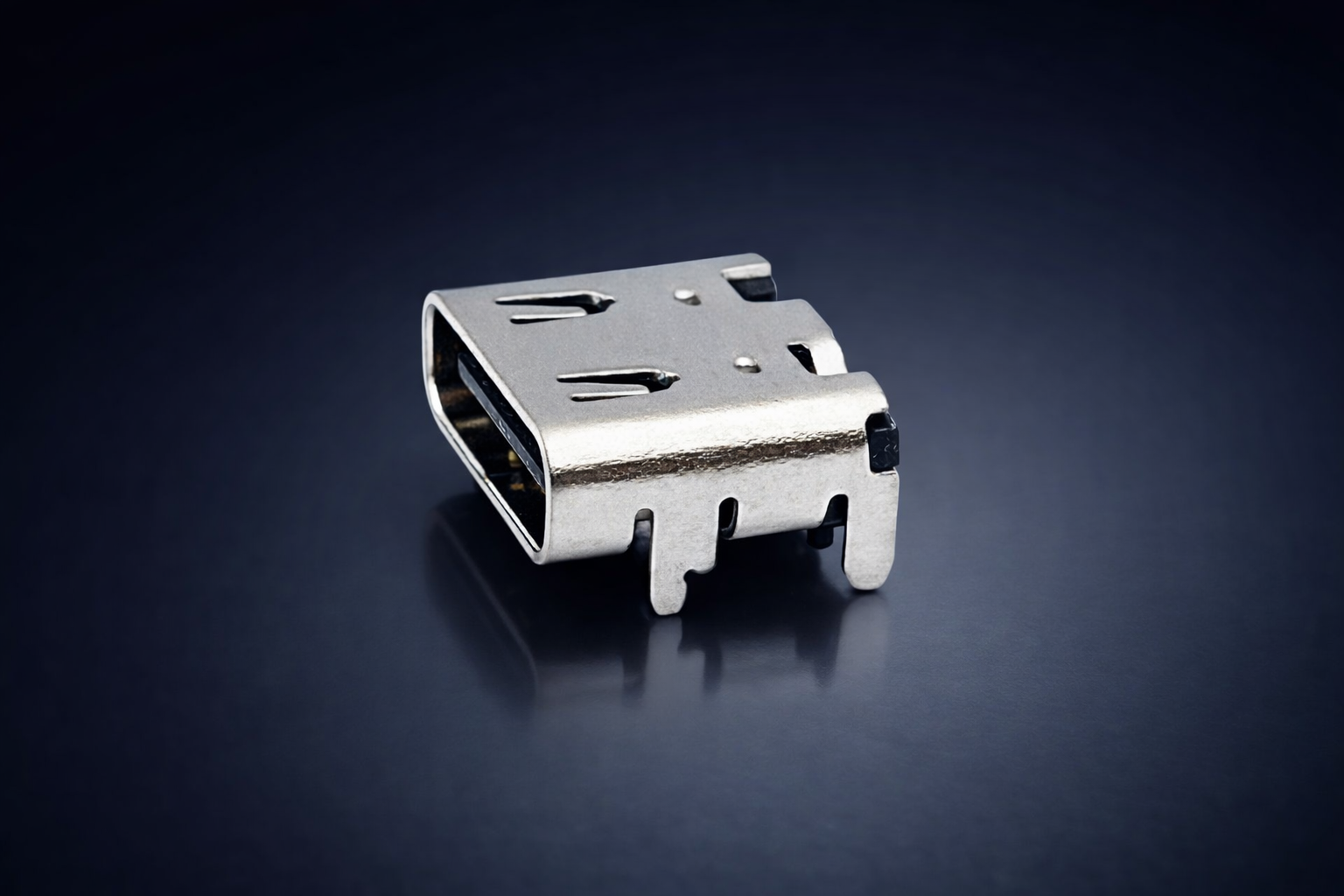
Let’s take a deeper look — using our D13-0824-16007 USB Type-C Receptacle as an example.
1️⃣ Do You Know…
USB-C Is Not a Speed Standard?
Many assume USB-C automatically means high speed.
In reality, USB-C only defines the connector form factor.
The actual data rate depends on the internal protocol:
-
USB 2.0
-
USB 3.2
-
USB4
-
Thunderbolt
Two connectors may look identical externally — but perform completely differently.
That’s why connector selection must align with your system architecture.
2️⃣ Do You Know…
USB-C Has 24 Pins — But Not All Are Always Used?
A full USB-C interface includes 24 contacts.
However, actual usage depends on application requirements:
-
USB 2.0 only
-
SuperSpeed lanes enabled
-
Alternate Mode supported
-
Power Delivery integrated
Different use cases require different internal routing designs.
Choosing the correct receptacle configuration is critical.
3️⃣ Do You Know…
Reversible Plugging Requires Mirror Signal Design?
USB-C’s reversible feature is not mechanical convenience — it’s electrical engineering.
-
Differential signal pairs are mirrored
-
CC pins detect orientation
-
The system dynamically configures signal routing
This symmetry requires precision terminal layout and signal integrity control.
4️⃣ Do You Know…
Mating Cycle Durability Determines Product Lifespan?
Standard USB-C connectors are typically rated for 10,000+ insertion cycles.
In real-world environments:
-
Industrial systems require frequent maintenance
-
Medical devices undergo regular reconnections
-
Automotive applications face vibration stress
Terminal spring design and plating thickness directly affect long-term reliability.
5️⃣ Do You Know…
Gold Plating Thickness Dramatically Impacts Performance?
10 µ″ vs 15 µ″ vs 30 µ″ gold plating is not just a numeric difference.
It influences:
-
Contact resistance stability
-
Oxidation resistance
-
Long-term signal integrity
-
Cost sensitivity (especially during gold price fluctuations)
For professional applications, plating specification is a strategic decision — not a cosmetic one.
6️⃣ Do You Know…
USB-C Can Transmit Video Signals?
Through Alternate Mode, USB-C can support:
-
DisplayPort output
-
High-resolution video
-
Multi-function docking
A compact connector may be handling high-bandwidth video data while delivering power simultaneously.
7️⃣ Do You Know…
Mechanical Reinforcement Is Critical?
USB-C ports are often the primary power interface of a device.
Without structural reinforcement:
-
PCB stress may increase
-
Solder joints may fatigue
-
Shield tabs may loosen
Well-designed receptacles integrate mounting posts and shield anchoring to improve mechanical stability.
8️⃣ Do You Know…
Different Industries Demand Different USB-C Priorities?
| Industry | Key Focus |
|---|---|
| Consumer Electronics | Slim design, cost efficiency |
| Industrial Equipment | Stability, durability |
| Automotive | Vibration & temperature resistance |
| Medical Devices | Reliability & hygiene compliance |
Although the connector name is the same, design priorities vary significantly.
9️⃣ Do You Know…
USB-C Is Becoming a Global Standard?
USB-C is increasingly adopted as the unified charging interface across devices worldwide.
This is no longer just a design trend — it is becoming regulatory direction in multiple markets.
Devices without USB-C risk appearing outdated in today’s ecosystem.
🔟 Do You Know…
Connectors Are Often the Most Overlooked — Yet Most Failure-Prone Component?
System failures are frequently traced not to ICs, but to:
-
Contact instability
-
Terminal fatigue
-
Plating wear
-
Mechanical stress
Connectors may be small components —
but they determine the reliability of the entire product.
Conclusion
USB Type-C is more than a port.
It is:
-
A power entry system
-
A high-speed data channel
-
A video transmission path
-
A mechanical stress point
-
A daily user interaction interface
When upgrading a product, improvement often starts at the connector level.
🏢 About Walta Electronic
Walta Electronic specializes in high-quality connectivity solutions, providing a full range of USB Type-C, HDMI, DisplayPort connectors, Board-to-Board connectors, power connectors, as well as custom cables and wire harness assemblies. With precision manufacturing and advanced R&D, we serve premium applications across consumer electronics, medical technology, industrial control, Telecommunications, and automotive electronics — helping our partners stay competitive with performance they can trust.
👉 Follow us on LinkedIn for the latest product updates and connector insights.
🔍 你知道嗎?
關於 USB Type-C 連接器,你可能不知道的 10 件事
當人們看到 USB Type-C 接口時,通常會想到:
「高速充電」
「高速傳輸」
「最新世代」
但在這個小小、可正反插的介面背後,其實隱藏著高度精密的工程設計。
讓我們以 D13-0824-16007 USB Type-C 母座 為例,一起深入了解。
1️⃣ 你知道嗎?
USB-C 並不是「速度標準」
許多人以為 USB-C 就代表高速。
事實上,USB-C 只是連接器的外型規格,真正決定傳輸速度的是內部協定,例如:
-
USB 2.0
-
USB 3.2
-
USB4
-
Thunderbolt
兩個外觀看起來相同的 Type-C 連接器,實際性能可能差異極大。
因此,選擇連接器時,必須與整體系統架構相匹配。
2️⃣ 你知道嗎?
USB-C 共有 24 個接點,但未必全部使用
完整的 USB Type-C 介面包含 24 個接點(Pins)。
然而實際使用時,會根據應用需求而有所不同:
-
僅支援 USB 2.0
-
啟用 SuperSpeed 差分線對
-
支援 Alternate Mode
-
整合 Power Delivery
不同應用場景,對內部線路配置的要求完全不同。
選擇合適的 Receptacle 規格至關重要。
3️⃣ 你知道嗎?
正反插功能來自鏡像電氣設計
USB-C 的可正反插設計,並非單純機構巧思,而是精密的電氣工程設計。
-
高速差分訊號成對鏡像排列
-
CC Pin 偵測插入方向
-
系統自動切換訊號路徑
這種對稱設計對端子佈局與訊號完整性都有極高要求。
4️⃣ 你知道嗎?
插拔壽命其實決定產品使用年限
標準 USB-C 通常要求 10,000 次以上插拔壽命。
但在實際應用環境中:
-
工業設備需頻繁維修與連接
-
醫療設備需反覆插拔與消毒
-
車用系統需承受震動與溫差
端子的彈性設計與鍍層品質,將直接影響長期可靠性。
5️⃣ 你知道嗎?
鍍金厚度會大幅影響性能與成本
10 µ″、15 µ″、30 µ″ 的鍍金厚度,差異不只是數字。
它會影響:
-
接觸電阻穩定度
-
抗氧化能力
-
長期訊號完整性
-
成本結構(尤其在金價波動時)
對於專業應用來說,鍍層規格是一項策略性選擇,而非單純外觀需求。
6️⃣ 你知道嗎?
USB-C 可以傳輸影音訊號
透過 Alternate Mode,USB-C 可支援:
-
DisplayPort 輸出
-
高解析度影像傳輸
-
多功能 Docking 應用
這代表一個小小的連接器,可能同時負責高頻寬影音訊號與電力傳輸。
7️⃣ 你知道嗎?
機構強化設計非常關鍵
USB-C 通常是裝置的主要電源接口。
若機構設計不足,可能導致:
-
PCB 應力集中
-
焊點疲勞
-
屏蔽結構鬆動
優質的 Receptacle 會整合固定腳與屏蔽加強設計,以提升整體機構穩定性。
8️⃣ 你知道嗎?
不同行業對 USB-C 的要求差異極大
| 行業 | 重點需求 |
|---|---|
| 消費電子 | 輕薄設計、成本效率 |
| 工業設備 | 穩定性與耐久度 |
| 車用電子 | 抗震動與耐高溫 |
| 醫療設備 | 高可靠性與耐清潔 |
雖然名稱相同,但設計優先順序完全不同。
9️⃣ 你知道嗎?
USB-C 正逐漸成為全球標準
USB-C 已成為多數裝置的統一充電與連接介面趨勢。
這不再只是設計選項,而是市場與法規發展方向。
缺少 USB-C 的產品,可能會顯得落後於市場主流。
🔟 你知道嗎?
連接器往往是最容易被忽略,卻最容易出問題的零件
許多產品故障並非來自主晶片,而是:
-
接觸不良
-
端子疲勞
-
鍍層磨耗
-
機構受力失效
連接器看似微小,卻決定整體系統的可靠度。
結語
USB Type-C 不只是「一個孔」。
它同時是:
-
電源入口
-
高速資料通道
-
影音傳輸介面
-
機構受力關鍵點
-
使用者每日接觸最多的零件
當產品升級時,
升級往往從連接器開始。
🏢 關於 Walta Electronic
Walta Electronic 專注於高品質連接解決方案,產品涵蓋 USB Type-C、HDMI、DisplayPort、Board-to-Board Connectors、Power Connectors,以及 客製化線材與端子線組。我們憑藉精密製造與專業研發技術,服務應用於 Consumer Electronics、醫療科技、工業控制、Telecommunications與車用電子 等高階領域,致力於協助合作夥伴以穩定性能立足競爭市場。
👉 歡迎追蹤我們的 LinkedIn,掌握最新產品資訊與連接器趨勢觀點。